By Raymond Osho
Under the scorch of the afternoon sun at the ever-busy Lafenwa Market in Abeokuta, the Ogun State capital, the air vibrates with noise, human movement and the relentless hustle that defines the area’s commercial pulse.
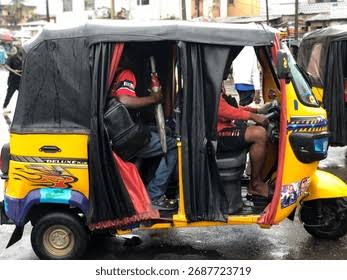
Amid the chaos of traders, buyers and vehicles jostling for space, one sight stands out, women, determined, focused and unbowed, gripping the handlebars of tricycles popularly known as keke.
In a society where commercial transportation has long been seen as a man’s domain, these women are defying gender norms, social stereotypes, and daily dangers, driven by one overriding goal: survival with dignity.
Across Ogun State, particularly in Abeokuta, more women are venturing into occupations once dominated by men. Economic hardship, broken homes, rising cost of living, and shrinking income opportunities have pushed many into the informal transport sector.
At Lafenwa, and other areas in the state where they operate, their stories intersect, stories of loss, courage, resilience, and grit. What society once frowned upon has now become a lifeline.
When Survival Leaves No Choice
“I became a keke driver when survival became the only option. I believe that as a woman, you don’t have to wait for any man for survival. If you are not waiting for a man to feed you, you must work hard.
“If men can work very hard to rise to the top nothing stops women from doing so. Women are not supposed to be lazy. Part of the reason many of us are driving keke is to prove to our husband that we are not lazy and that we are supportive.
Once a small-scale pharmaceutical shop owner, Balogun watched her business crumble as Nigeria’s economic realities tightened, rising inflation, dwindling purchasing power, and increasing operating costs. Today, her tricycle is her only means of sustaining her household. For her, the decision was born of desperation and responsibility. Sharing her life experience; the 43-year-old mother of four became a tricycle operator after her husband left her five years ago, conditioning her to cater for her children by herself.
“I have seen a lot in this life, so I cannot be waiting or depending on any man for survival.
“My husband left me with four children and no means of survival. He left five years ago. Imagine staying without your husband for years when you have children to cater for. I know what I go through daily to make money, do I even have a choice?
She continued “I was formerly a chemist, but due to the economy, the profit became too small. The little I was earning could not take care of my children. I needed more for such a huge responsibility.
The shame society expected her to feel never came. Instead, she rides with her head held high, knowing her children’s future depends on her daily hustle.
Another rider, Biola Odejobi, tells a similar story. Once a thriving business-woman, she turned to tricycle riding when her business slowed and bills piled up.
Odejobi explained that her husband supported her decision. For her, the income, though modest, restored financial stability and reaffirmed her role as a contributor within her family.
“Instead of doing anything illegal or sleeping around with men to make money, we chose dignity. Although this job is mostly for men, we felt it is better to venture into riding tricycles commercially than to lose our self-respect. Women who drive keke are strong women.
“My business was no longer thriving, and I could barely take care of my role as a mother. I had to do this to support my husband and our home. My husband does disturb me. He loves what I do and keeps encouraging me.
Women Training Women
Yetunde Bamitale is not just a keke rider; she is also a mentor. She trained many women riders in Abeokuta.
“I teach other women how to ride keke. In this Lafenwa garage alone, there are about 20 women who are active keke drivers and more are learning,” she said.
Her role reflects a growing, informal network of women empowering other women to survive Nigeria’s harsh economic climate.
The Economics Behind the Wheel
Contrary to public perception, tricycle riding is financially rewarding. According to findings by the National Bureau of Statistics (NBS), Nigeria’s informal sector employs over 80 percent of the workforce, with transportation being one of the fastest-growing segments.
The same data shows that rising unemployment, currently affecting over 33 percent of the labour force (expanded unemployment and underemployment) has pushed many Nigerians into informal jobs.
In urban centres like Abeokuta, commercial tricycle operators earn between N7,000 and N10,000 daily, depending on routes, fuel costs, and remittance agreements. This translates to an average monthly income of N200,000 to N300,000, far above the national minimum wage.
Mrs. Balogun confirmed this reality, saying “I still make up to N10,000 profit daily. My first child is in secondary school, where I pay N100,000 school fees every term. After remitting the daily delivery fee to the keke owner, I still make enough to survive. What if I were the owner?”
“I make nothing less than N7,000 to N8,000 per day. There is profit in this business, I know how much it amounts to at the end of every month,” said Mrs Bamitale.
With inflation currently above 27 percent, according to NBS, many women are abandoning traditionally “feminine” trades like tailoring and hairdressing, whose earnings have failed to keep pace with rising costs.
The Burden of Gender on the Road
Despite the financial benefits, the job comes with significant challenges. Female riders face harassment, intimidation, discrimination, and physical threats, not just from passengers, but also from male colleagues and security operatives.
Mrs. Bamitale recounts some disturbing experiences: “We face challenges daily, confrontations from passengers and even soldiers. Sometimes, male riders harass us or try to intimidate us.
“We once exchanged punches with soldiers who were not in uniform because we didn’t know they were soldiers. We have an association that fights for us.
Their struggle is not just against bad roads or scorching heat, but against deep-rooted societal prejudice questioning their right to work.
Experts Weigh In
A development economist, Adewale Akinyemi, described the phenomenon as a reflection of Nigeria’s shifting labour dynamics. He said due to the current economic situation in the country, there is no job that is getting gender based.
“What we are seeing is economic adaptation. As formal jobs shrink and inflation rises, women are entering survival-driven sectors traditionally reserved for men. This is not a choice born of ambition alone, but necessity. What people are after now is survival.
A legal practitioner, Omotolani Oyedeji stated that riding tricycles is a legitimate way of making money for women, adding that there is no limitation to what women can do in Nigeria as long as it is legitimate.
Oyedeji condemned the bullying of women simply because they are doing jobs traditionally regarded as men’s work, while appealing to the women to take legal steps through their association in order to put an end to the harassment.
She said: “ It’s a way of making legitimate money, and there is no limitation to what they can do as long as the money is legitimate. If they are being bullied, they should take legal steps, not as an individual rider but as an association or group.”
A gender policy analyst, Mrs. Funke Ogunleye, added: “These women are redefining gender roles in the informal economy. However, government and transport unions must ensure that these women are safe, not harassed, and have access to credit”
When Women Work, Economies Grow
Going by data by World Bank Nigeria’s female labour force participation rate is notably high in a global context. The World Bank report suggests that around 80% of Nigerian women aged 15 and over are active in the labour market. This figure is well above many other countries and indicative of women’s central role in economic activity.
Meanwhile, the UN-WOMEN has argued that when more women work, economies grow. Women’s economic empowerment increases economic diversification and income equality for shared prosperity. The organization said it is estimated that closing the gender gap could give the global economy a USD 7 trillion boost.
Increasing women’s and girls’ educational attainment contributes to women’s economic empowerment and more inclusive, environmentally sustainable economic growth. Education, upskilling, and re-skilling, especially to keep pace with rapid technological transformations affecting jobs are critical for women’s and girls’ health and wellbeing, as well as their income-generation opportunities and participation in the formal labour market.
The organisation stated that women’s economic equality is good for business. "Companies greatly benefit from increasing employment and leadership opportunities for women, which is shown to increase organizational effectiveness and growth. It is estimated that companies with three or more women in senior management functions score higher in all dimensions of organizational performance”
Breaking Barriers on Three Wheels
For the leadership of the Tricycle Owners and Riders Association of Nigeria (TORAN) in Ogun State, the growing presence of women behind the handlebars of commercial tricycles did not happen by chance. It was a deliberate intervention aimed at economic inclusion, dignity, and survival.
Ogun State Vice Chairman of TORAN, Gbenga Ogunwale disclosed that the decision to bring women into the tricycle transport sector was born out of a recognition that many women were trapped in unemployment and street-level hustles that offered little stability for their families.
“Having women riders amongst us is a welcome development. We initiated it ourselves.The journey began modestly, with just ten women. TORAN provided structured training for them and went further to facilitate access to tricycles through an installment payment plan. "Within 18 months, the women had fully paid for their vehicles, an achievement that challenged prevailing stereotypes about women’s capacity to thrive in the male-dominated transport sector.
The vice chairman explained “After they paid back, other women started coming. There was a day we had to train more women and sort keke for them too.”
Today, that initial experiment has grown into a quiet revolution on the streets of Abeokuta. About 70 women tricycle riders now operate across the metropolis, earning steady incomes, supporting households, and in many cases, becoming primary breadwinners.
Beyond numbers, TORAN’s leadership has worked deliberately to ensure harmony between male and female riders. He stressed that respect was non-negotiable.
Ensuring Gender Equality Amongst Riders In Transport
The vice chairman disclosed: “We made it clear to the men that they must treat the women like their wives.”
This directive, reinforced through union leadership, helped prevent harassment and hostility, fostering a work environment where women could operate without fear. To deepen inclusion, women riders were granted direct access to union information and assigned responsibilities within the association, giving them a sense of belonging and ownership.
This is in line with the UN-WOMEN’s report which stated that women’s economic empowerment is essential to achieving women’s rights and gender equality.
The report further stressed that women’s economic empowerment means ensuring women can equally participate in and benefit from decent work and social protection; access markets and have control over resources, their own time, lives, and bodies; and increased voice, agency, and meaningful participation in economic decision-making at all levels from the household to international institutions.
According to the organisation, promoting women’s economic justice and rights in the economy and closing gender gaps in the world of work are key to achieving the 2030 Agenda for Sustainable Development and achieving the Sustainable Development Goals.
“Women’s economic empowerment is essential to achieving women’s rights and gender equality. Women’s economic empowerment means ensuring women can equally participate in and benefit from decent work and social protection; access markets and have control over resources, their own time, lives, and bodies; and increased voice, agency, and meaningful participation in economic decision-making at all levels from the household to international institutions”.
In a state like Ogun, where economic pressures continue to mount, these women have turned three wheels into lifelines. Their daily hustle, navigating traffic, negotiating fares, and enduring long hours under the sun, has become a powerful symbol of resilience
*Culled from Fackt News